Workbook

subscription prices for other websites

to figure out what we could charge for our site we compared the prices of other subscription services.

spotify = $14.99 per month

Netflix=  basic $11.49 premium $18.49

Amazon= 19.89 per month, Prime 119 per year, student prime $59 per year

audible= $22.89 per month

Youtube = $18.36 per month

lightbox= $12.99 per month

owl crate= $29.99 per month

city fitness= $6.99 per month

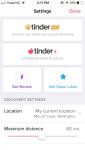
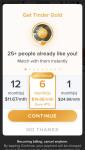
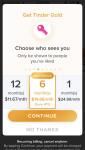
tinder= $12.99 or over 30 years old $24.99

from this, we decided that Zip should be priced at $13.00 per month

if we need $100,000 for the first year at $13 that means we need about 7,693 payments of $13.
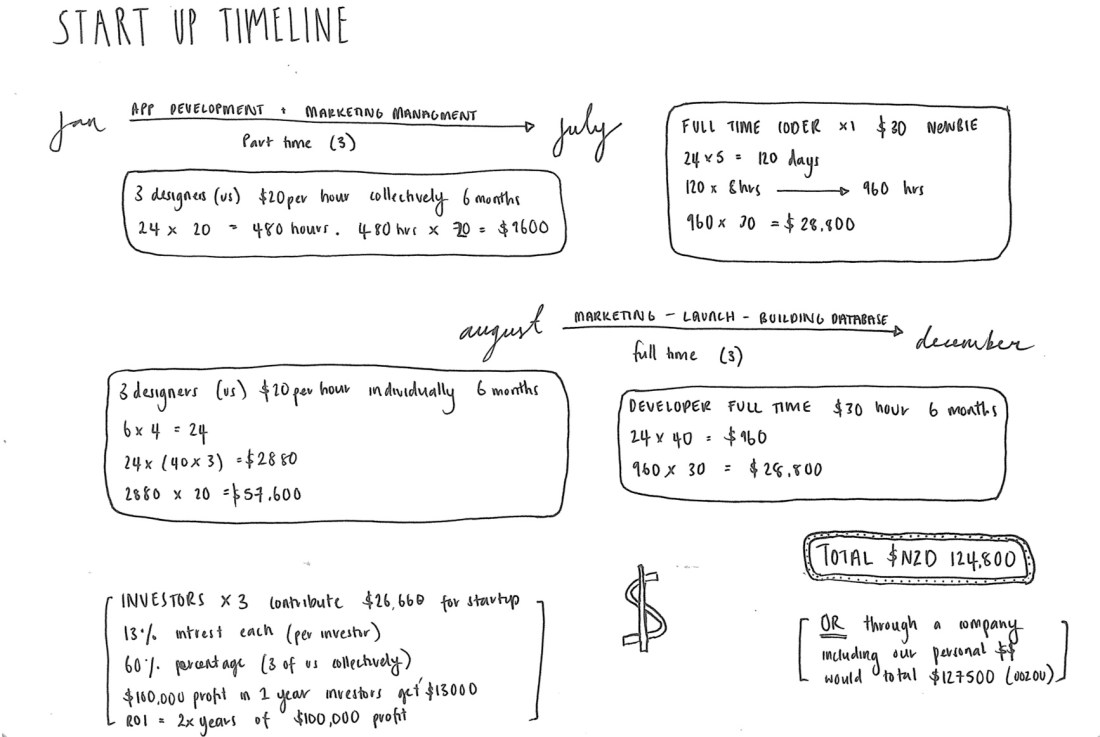
Resources we might need for the app

Things we might need to consider what we would need to start the app off

  • a business license
  • the salary for a coder
  • marketing materials
  • website domain
  • office space (eventually)
  • database space
  • intellectual property or trademarking
  • software
  • admin and account manager
  • advertising manager
  • designer

6 Question to ask

  1. what is the problem you are trying to solve
  2. is the product going to disrupt any industry? If not what is the unique selling point?
  3. what is the current market size?
  4. what is the project market growth a  few years down the line?
  5. have you run any tests for product market fit?
  6. do you have the resources and capacity to solve the problem? if not what are you missing?

question to consider when developing the concept

Updated idea

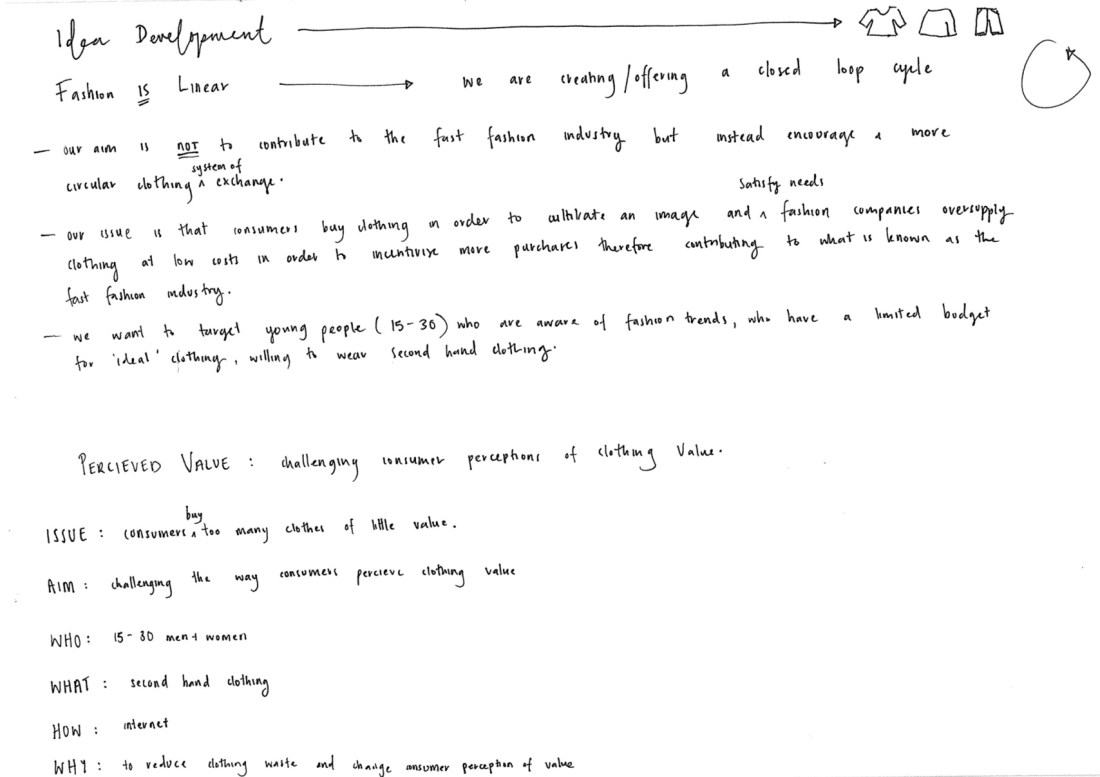
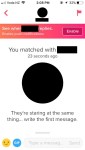
Over the past few weeks, we have been refining our issue and aim. recently we refined our issue to being related to consumer behavior to fashion and the industries ability to drive customer purchasing behavior. So our aim was to step away from the linear fashion system where money determines the value and to challenge the way consumers perceive clothing value in a way that doesn’t contribute to the fashion system. we propose to be making ‘tinder for clothes’ to which we apply the features and familiarity of the tinder business model to a system of clothing exchange. We are selling something you can’t buy in a store, preloved clothing that people have given value too, through experiences that they no longer want. Those who benefit the most are the people getting new clothes getting clothing without spending any money, society by having fewer clothes consumed, consumers who can still keep up with the trends.

However, from our one minute pitch, we were given feedback that meant that we have to simplify our idea because it translates as being more academic and we need to use language that appeals to a lasting audience. So we have refined our idea further, seen on the page below.


idea update

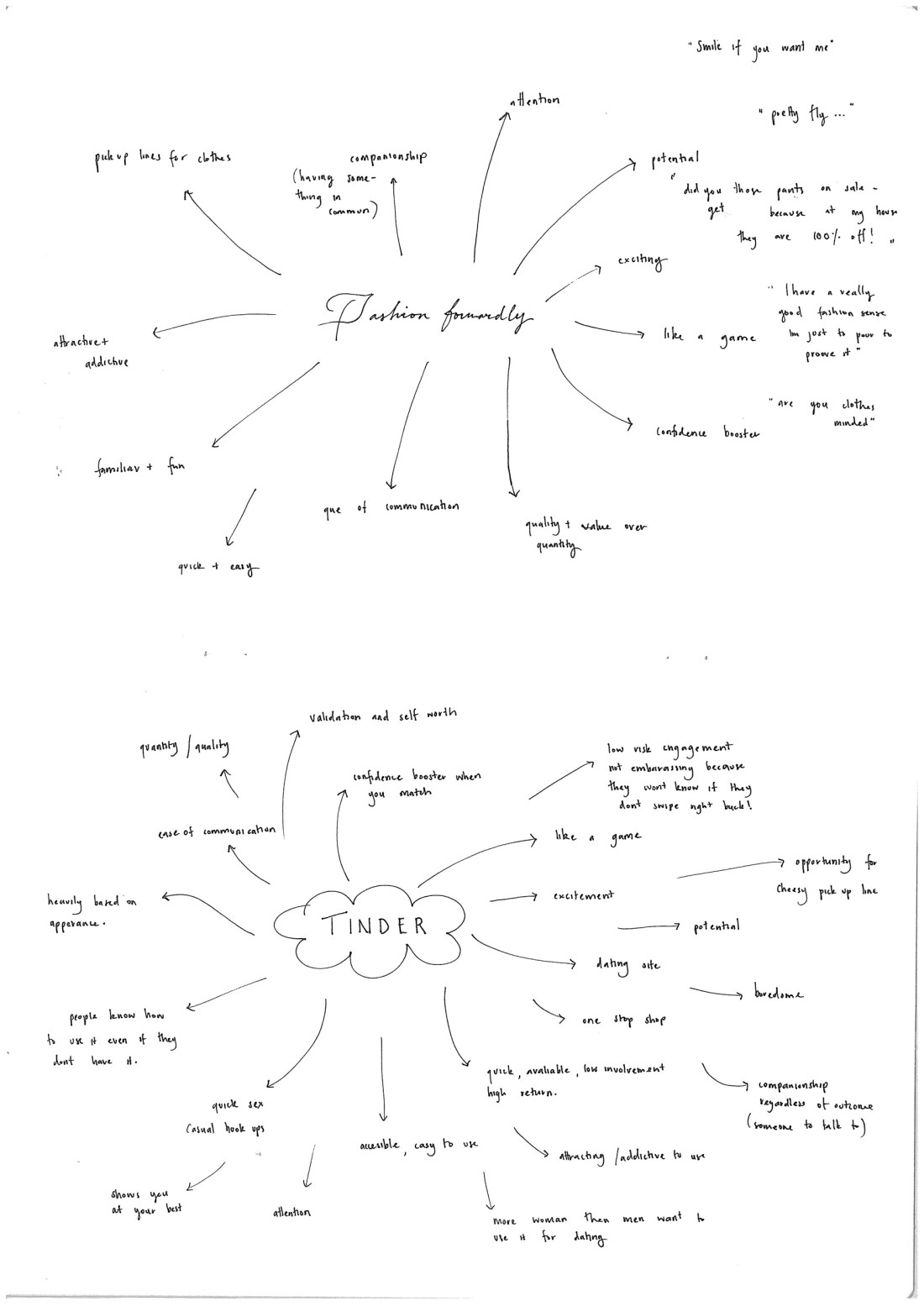
Tinder Functions

We had a brainstorm on the different uses consumers had for using Tinder. We found that it is the immediate connotations of the app that we wanted to use to sell our app. We also wanted to be risky, so that we would stand out in the crowd of other apps constantly hitting the market.  So we did another brainstorm on what function of tinder we could use in our app.

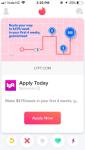
The idea of using Tinder as an analogy means we have to make a joke out of it, so in our making tactics we could use cheesy chat up lines as slogans to get consumer attention, We particularly like ‘ are you clothes minded” as a slogan for our app, though other chat up line could be used in branding materials.


Tinder functions

Funding

We wanted to do some research to get a better idea of how much it would cost, in real terms to develop this business. So we did some online research on how much companies charge to develop an app. We got a lot of mixed information, we did, however, discover that apps in general start off at about $10,000 and can go as high as several million.


Crowdfunding

we could use a crowdfunding website like Kickstarter to make sure we reach the people really interested in the development of the app.

Small business loan

we can apply for a loan from the bank, the only problem is that we don’t have any  security for the investment (I.E we don’t have a house to mortgage)

Family and friends (self-investment)

Get family and friends to crowdfund the project. This could work but then everyone we know would be taking a risk on our project, and it might not succeed.

Seed investment/ bootstrapping

this method we start with a very small amount of money, that we have made form personal savings and then we grow the business in stages.

Logo

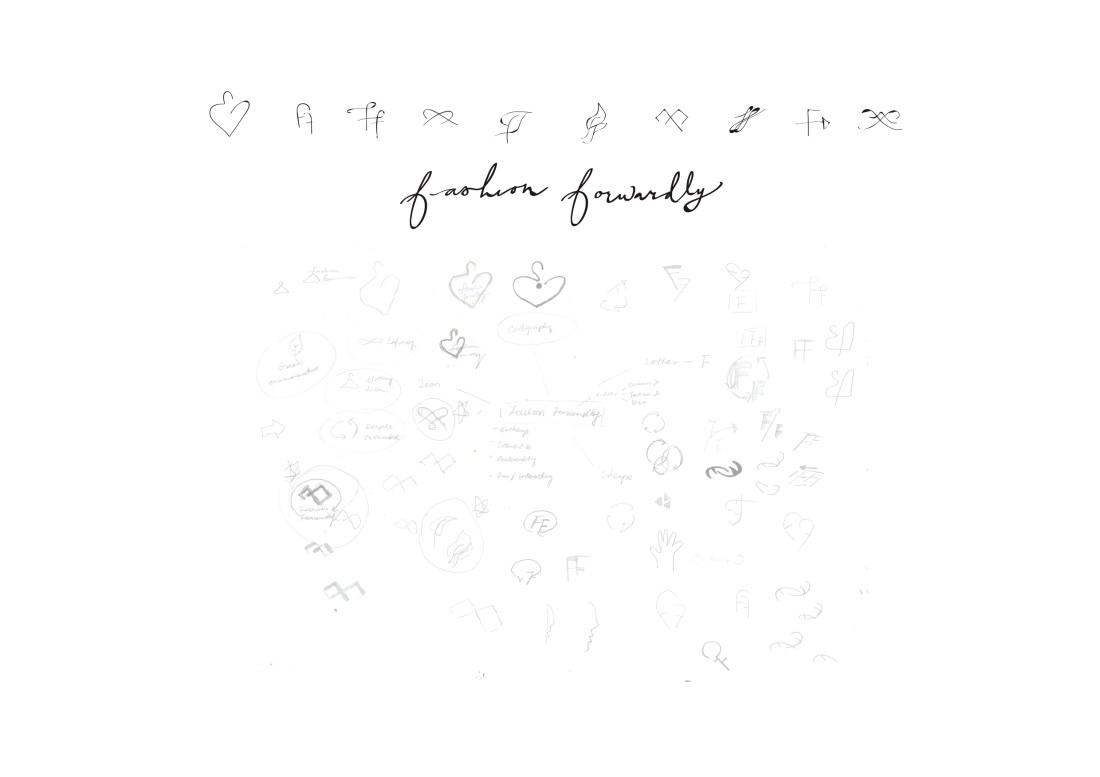
Our initial ideas for a logo that could be used for an app, or on a website, and can also be used throughout all marketing channels. We played on the idea of the double F in fashion forwardly and the use of circles, coat hangers, leafs, and arrows. These are all common reference points in sustainable clothing and fashion branding.


logos copy

SWOT

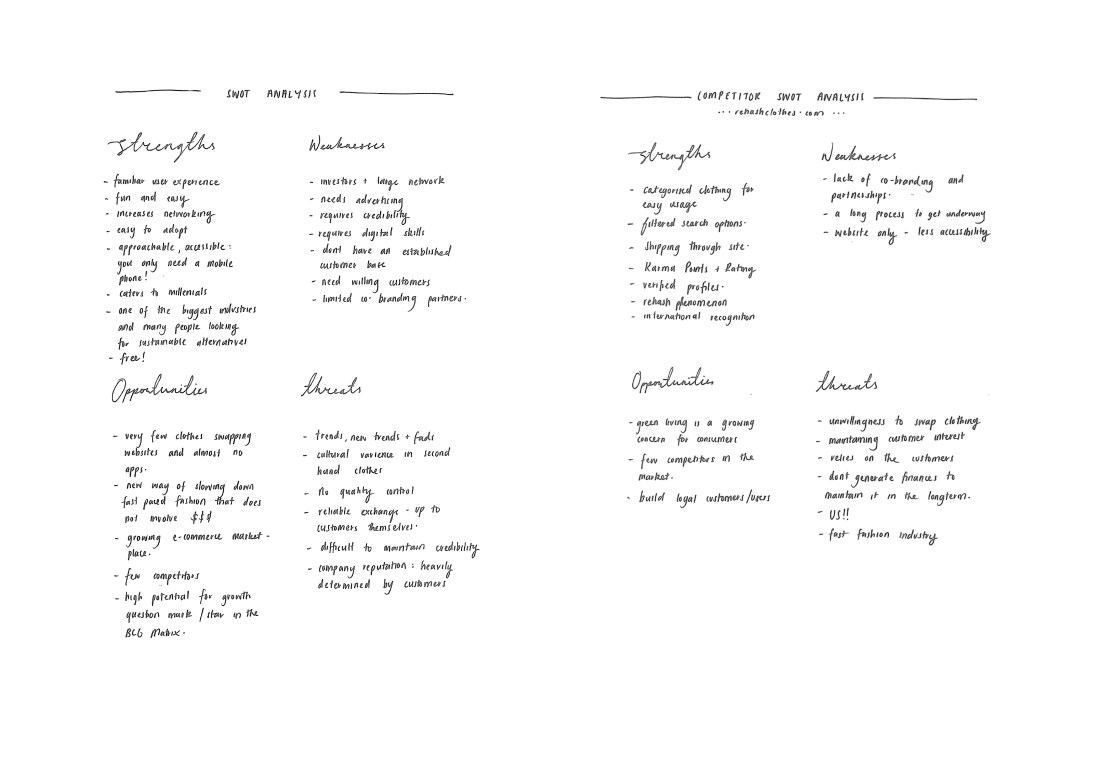
We did a SWOT analysis of our current concept and another SWOT analysis for a competitor brand to see if we have enough brand diversity. Our current concept doesn’t have to many competitors there are only two websites that are active running and both of them have low user engagement numbers. We looked at a website called rehashclothing.com which allows users to swap their clothing for free via the internet. The fact that these websites have low user engagement numbers is what made us sure of the need for an app that was available on your phone that had a engaging use interface which would allow users to go through the items on the site like a game.

SWOT.jpg

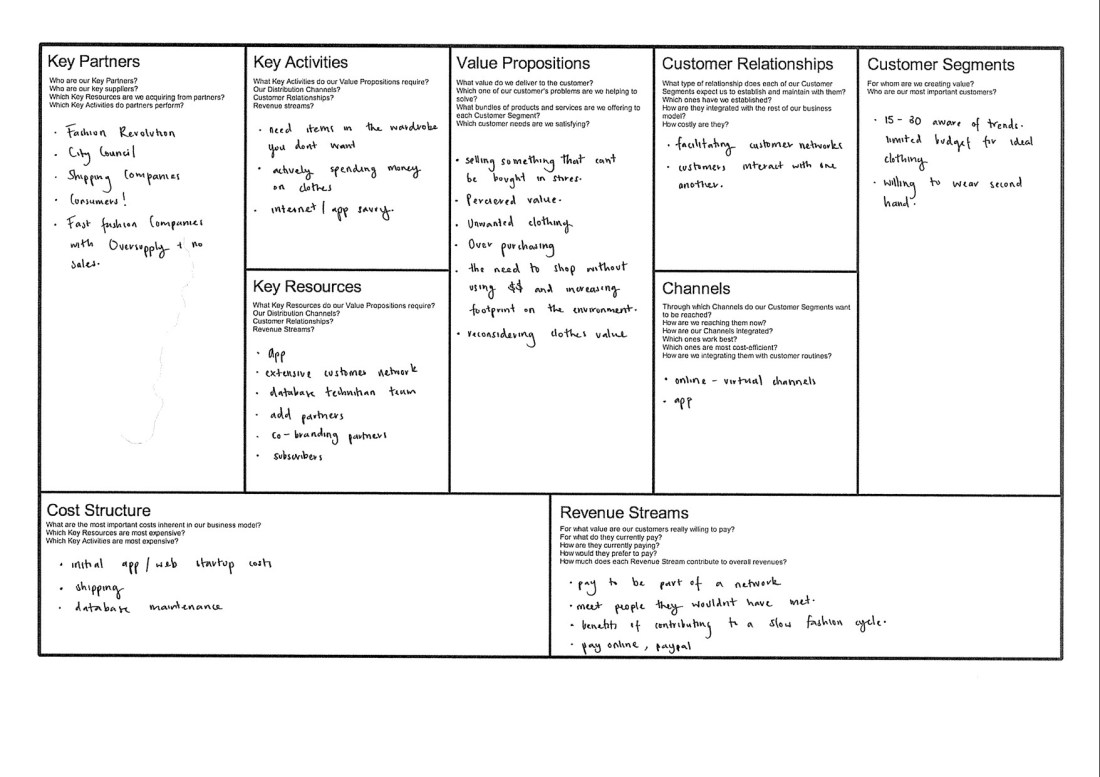
We filled in a business canvas to help outline the perimeters of our current idea. We wanted to get a handle on what was needed to successfully execute the concept. We discovered that a lot of our idea works, the key problem we are facing is the initial cost of developing an app. The research we looked at suggests that it can take anywhere from 10,000- millions to develop an app.

business canvas copy