Workbook

Do you wear all your clothes?

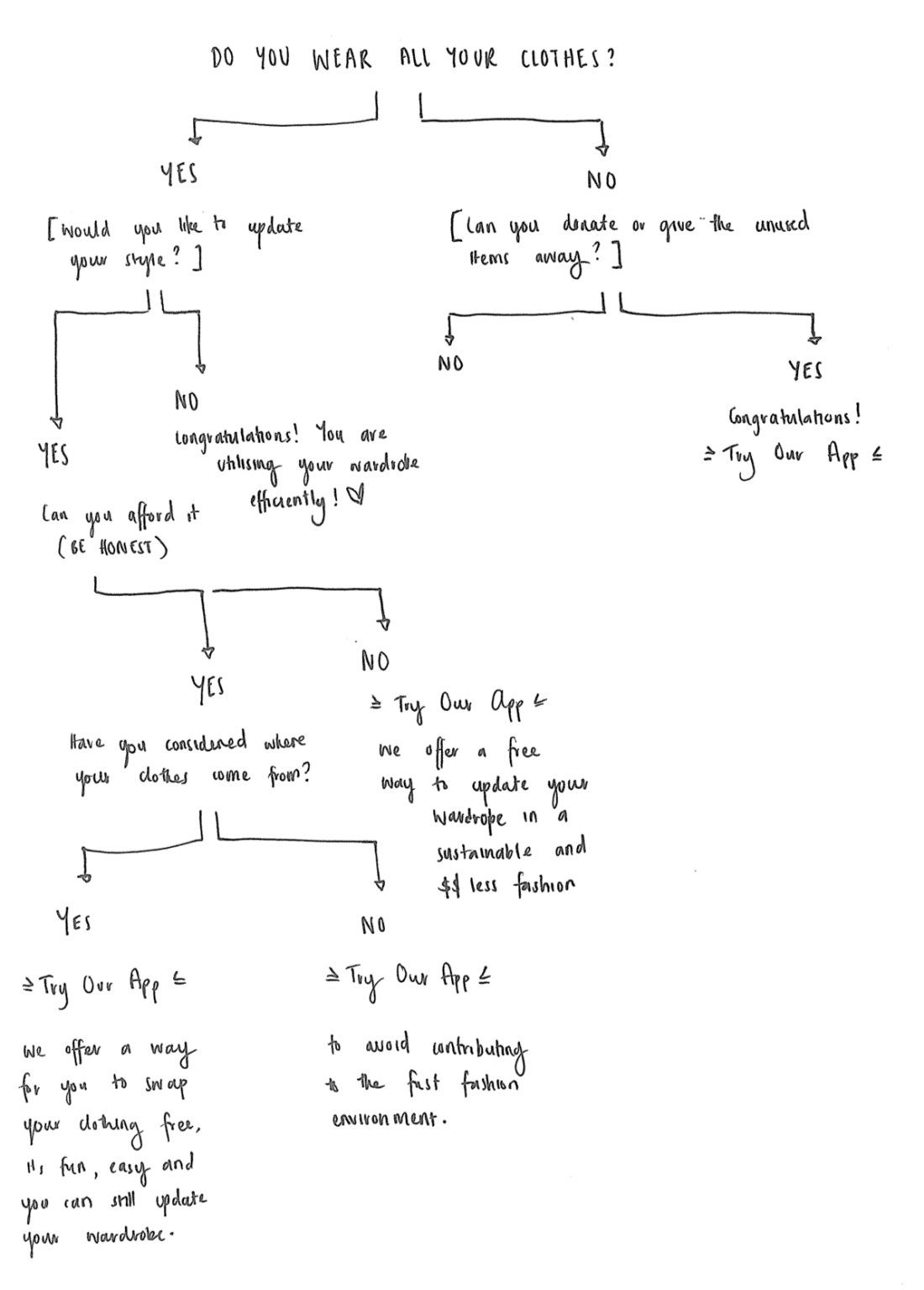
We wanted to establish a flow chart so that we could establish who the potential customer might be. The first question “Do you wear all your clothes?” is a response to the initial question of this project “what would you do if you couldn’t buy any more clothes?” That question arose as we started to think about consumer behaviour in when it comes to purchasing clothing. We wanted to get a sense of the underlying reasons consumers purchase clothing so that we could design an app that taps into that impulse.

This flow chart considers the possible flow chart of the possible thought process a potential customer might have when they are considering using the app, and it outline some of the benefits to the consumer of using the app.
do you wear all your clothes.jpg

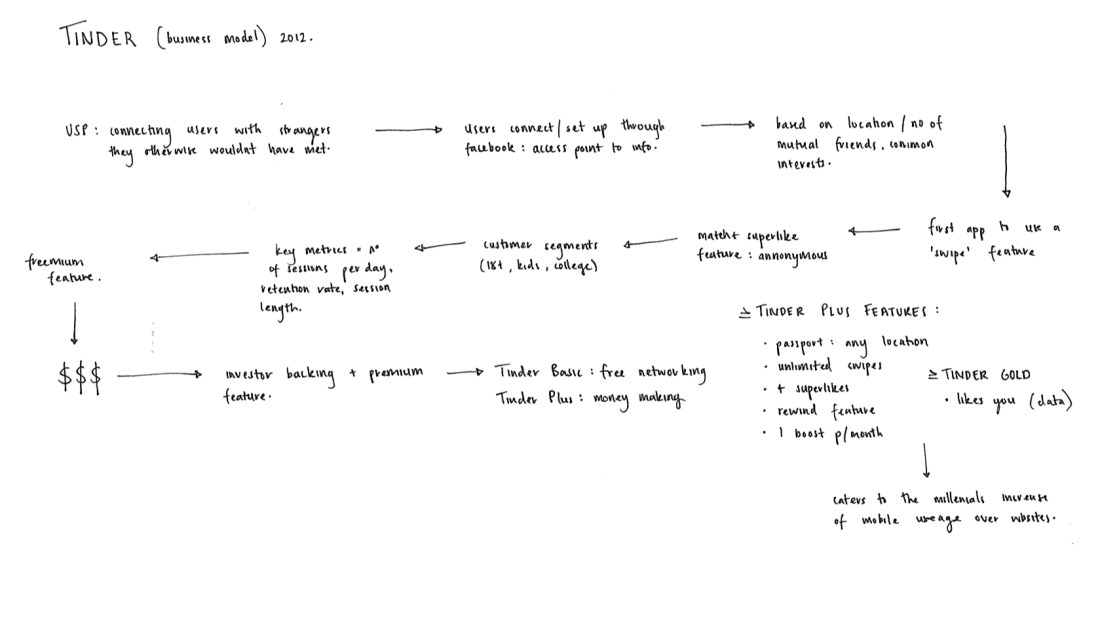
Tinder Business Model

In terms of our own business, we wanted to find out Tinder has been successful as free application. Looking into their business model, they have used a freemium business model. This meant that the initial download is free, known as Tinder Basic, which allows consumers to network for free. The premium element, Tinder Plus, requires a monthly fee which allows access to further benefits through added features. The other way tinder makes money is through advertisements in the form of profiles on the app.

Three things that are significantly important to the success of the Tinder business model is the free install, the swipe function and the co-branding element with facebook for added security.

  1. The free install allowed a multitude of consumers to interact with each other in an easily accessible way. Once Tinder had grown its databases, increased exposure and established customer loyalty, it was able to deliver a successful service and offer extensive benefits (at a price).
  2. Tinders USP (unique selling point) is their swipe feature and ability to connect users with strangers they otherwise wouldn’t have met. This feature is essential to the user experience and convenience of using the app. It ultimately contributes to todays demand for instant results (see now buy now, what what you want when you want it).
  3. The ability for Tinder to co-brand with Facebook, ensured security and safety through association of an already existing and reliable social media platform.

Tinder Business model

Issue: consumer behaviour towards fashion

“What would you do if you couldn’t buy any more clothes…ever?” – April Fini –

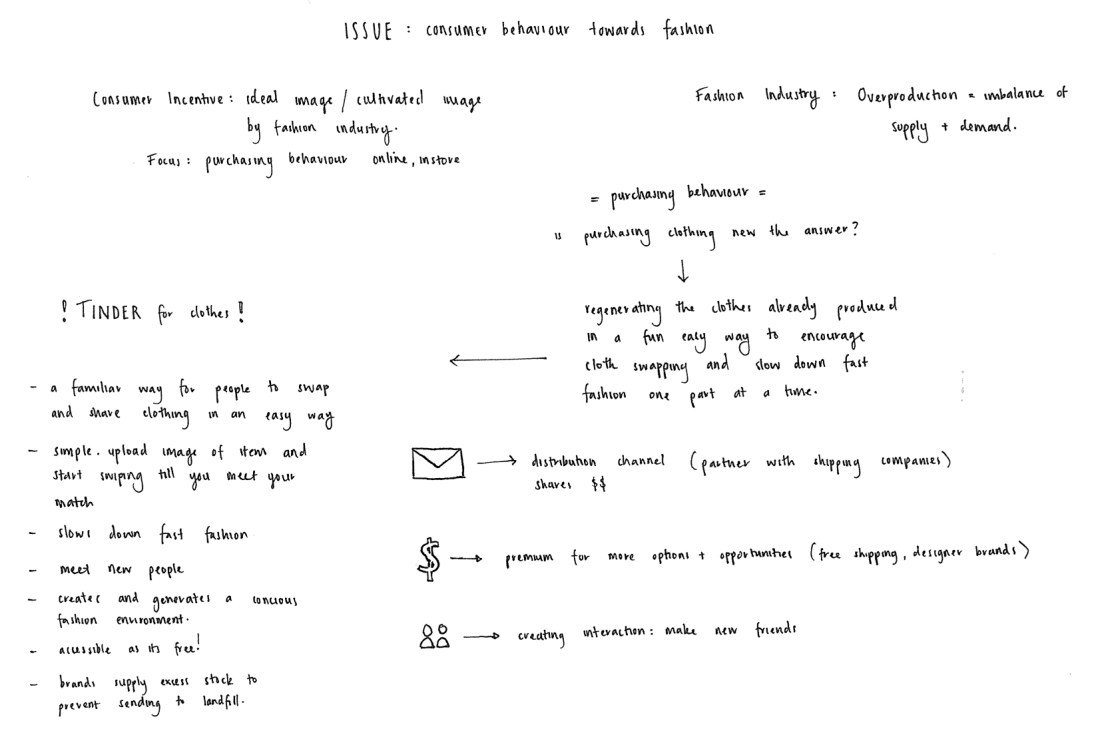
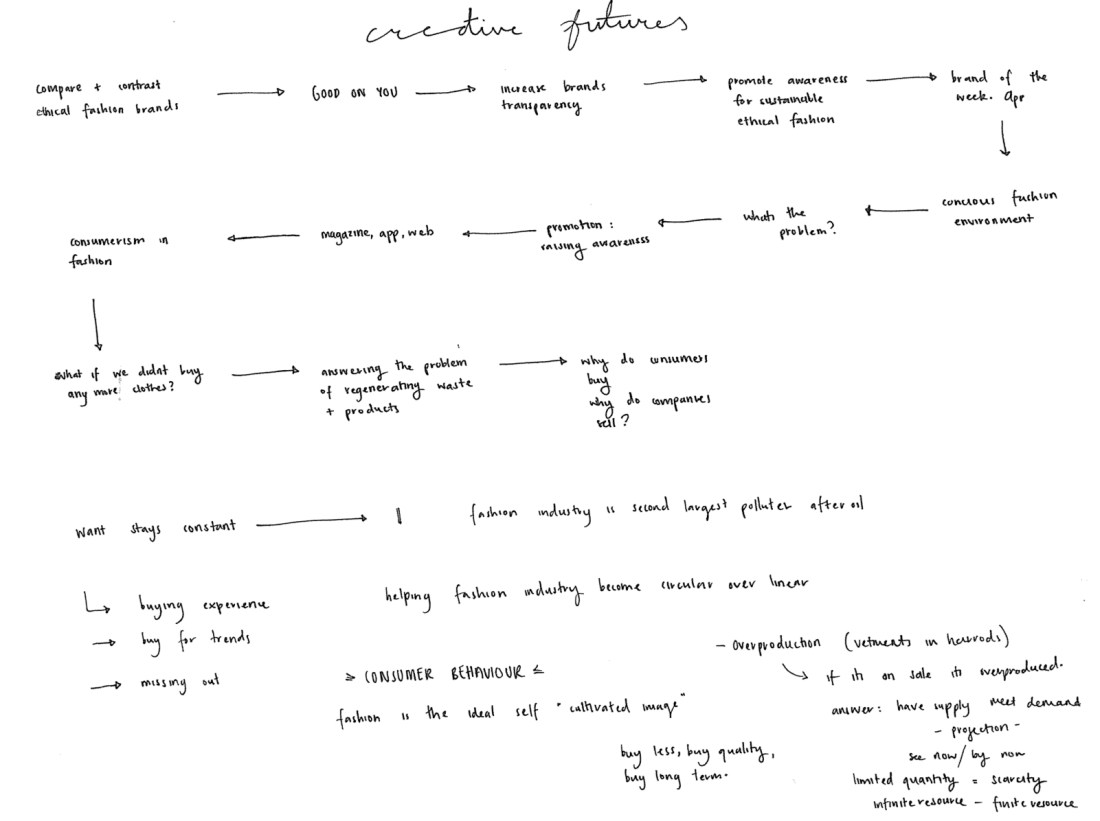
Researching our aim in order to refine a more specific issue and idea. We came to the conclusion that consumer incentive is lead by the fashion industry’s ability to shape a cultivated image. This is a big influence on consumer purchasing behaviour in store and online. Meanwhile when we looked further into the fashion industry we noticed there was and overproduction of goods which meant supply outweighed demand.

With this research and considerations in mind we began to think about ways we could slow down the fast fashion industry. Ultimately we decided we don’t want to contribute to the fast fashion industry, but instead, encourage a more circular clothing cycle.

Aware of  already existing clothes swapping market places, we wanted to create a fun, familiar, interactive space for consumers to find new garments without contributing to the fast fashion economy. So, after a lot of conversation, we came up with the idea of creating an app based off Tinder which allows you to upload your garments and match with other people hoping to swap their own clothes too.

issue.jpg